- Home/
- Buy Clomid at Low Price in the United Kingdom
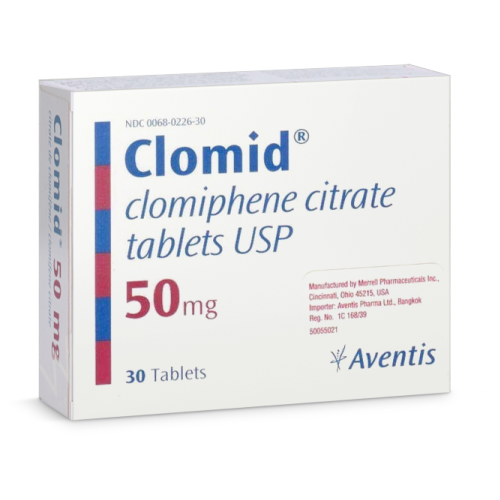
| Name of medicine | Clomid |
|---|---|
| Main component | Clomiphene citrate |
| Used for | Ovulation induction in female infertility |
| Strengths available | 50 mg tablets, 25 mg may be available (less common) |
| How quickly it works | Ovulation typically occurs 5–10 days after the last tablet |
| Length of effect | One treatment cycle covers a single ovulation event |
| How to take | Oral course, usually once daily for 5 days per cycle |
| Legal status in UK | Prescription-only; regulated by the Medicines and Healthcare products Regulatory Agency (MHRA) |
Clomid: Guidance for Use and Access in the United Kingdom
Clomid (active ingredient: Clomiphene citrate) is a prescription medication widely used to help women with certain types of infertility by stimulating ovulation. It is legally available in the United Kingdom under the supervision of a healthcare professional, and its use is regulated to ensure safety and efficacy. Understanding how it works, who it is suitable for, and how to access it can clarify your next steps if you are considering treatment for difficulty conceiving.
Infertility: You Are Not Alone, and It Is Treatable
Infertility is a challenge faced by many women and couples, and in the UK, it is neither uncommon nor insurmountable. According to the National Institute for Health and Care Excellence (NICE), around 1 in 7 couples in the United Kingdom experiences difficulty conceiving—amounting to roughly 3.5 million people each year (NICE, 2013). The World Health Organization (WHO) also identifies infertility as a global health concern, affecting 17.5% of the adult population worldwide at some point (WHO, 2023). Importantly, most cases of female infertility have underlying causes that can be addressed with the right guidance and treatment. Ovulatory disorders—where the ovaries do not release eggs regularly—are among the most common and treatable factors. Modern medical options like Clomiphene have made it possible for many women to achieve pregnancy after months or even years of uncertainty.
How Clomid Addresses Female Infertility: Mechanism and What to Expect
Clomid works by influencing the hormonal signals that regulate ovulation. Normally, the brain releases a hormone called FSH (follicle stimulating hormone), which prompts the ovaries to mature and release an egg. In some women with infertility, this process is disrupted. Clomiphene acts as a selective oestrogen receptor modulator: it blocks oestrogen receptors in the brain’s hypothalamus, effectively making the body “think” oestrogen levels are low. In response, the brain increases the output of FSH and LH (luteinising hormone), both key triggers for ovulation.
For the patient, this means that after completing a typical 5-day course of Clomid early in your menstrual cycle, ovulation is likely to occur between 5 and 10 days after the last tablet. Clinical studies show that ovulation is induced in about 70–80% of women with certain types of anovulation (such as polycystic ovary syndrome), and roughly 40–45% of those who ovulate with Clomid conceive within six cycles of use (British Fertility Society, 2017). While success is not guaranteed for everyone, Clomiphene remains a first-line treatment because it is non-invasive, widely studied, and often effective for women whose infertility is due to irregular or absent ovulation.
Is Clomid Right for My Situation? Scenarios and Selection Guidance
| Situation | Recommended action | Reasoning |
|---|---|---|
| Your periods are irregular or absent, and tests show you do not ovulate regularly | Clomid is a suitable first-line option | Because Clomiphene is proven to induce ovulation in women with anovulatory cycles, especially with PCOS or unexplained ovulation disorders. |
| You have regular cycles but have not conceived after a year of trying, with no other identified issues | Consider further investigation before Clomid | Because if you already ovulate, Clomid may not improve your chances; referral for additional fertility testing is advised as per NICE guidelines. |
| Male partner has abnormal semen analysis | Address male factors first | Because Clomid acts on female ovulation; male factor infertility requires different interventions. |
| You have blocked fallopian tubes or known uterine abnormalities | Clomid is not suitable | Because the medication does not address mechanical barriers to conception; surgical or assisted reproductive options may be considered instead. |
| You have a history of hormone-sensitive cancer | Clomid may be contraindicated | Because stimulating oestrogen receptors could increase risk; specialist consultation is essential. |
Not every cause of infertility responds to Clomid. Its effectiveness depends on the underlying reason for infertility, and its use should always follow assessment by a doctor or fertility specialist. If there are additional health factors involved, a tailored approach is crucial.
How Clomid Is Used: What to Expect in Daily Life
- Course schedule: Clomid is usually started between days 2 and 5 of your menstrual cycle. One tablet (commonly 50 mg) is taken daily for 5 days. The starting dose can be modified by your doctor if necessary.
- Monitoring: Ovulation is often tracked with home ovulation predictor kits, blood tests, or ultrasound scans. This helps time intercourse or intrauterine insemination for best results.
- If you miss a dose: Take it as soon as you remember, but do not double up. Missing a tablet may reduce the chance of ovulation that cycle, but is not dangerous. Continue the course if within the same cycle.
- If ovulation does not occur: Your doctor may increase the dose in subsequent cycles or suggest additional investigations. Do not increase the dose yourself—medical supervision is important.
- What is “normal” to experience: Some mild side effects (see below) are common. Emotional changes, hot flushes, or abdominal discomfort may occur but do not usually require stopping treatment.
- What needs attention: Severe symptoms, such as significant abdominal pain, vision changes, or shortness of breath, should prompt you to contact your healthcare provider promptly. These can indicate rare but serious complications.
- Other medications: Always inform your clinician about any other prescriptions or supplements, as interactions can affect treatment.
Practical planning—such as using ovulation tests and keeping track of cycles—can help you and your doctor fine-tune the approach for best outcomes. If several cycles of Clomid do not result in ovulation or pregnancy, further evaluation is needed to avoid unnecessary exposure and to identify the next steps.
Clomid: Who Must Avoid It and Why
Certain health conditions make Clomid unsuitable. The logic is not just legal, but medical—some risks outweigh benefits in particular situations. Here are the main contraindications and the reasons behind them:
- Liver disease: Clomiphene is processed by the liver. Impaired liver function means the medication may build up or trigger toxicity, so it is not advised.
- Unexplained uterine bleeding: Until the cause is clarified, Clomid should not be started as it could mask or worsen underlying conditions like endometrial cancer.
- Ovarian cysts not due to polycystic ovary syndrome: Because Clomid can enlarge cysts, worsening pain or risk of rupture.
- Pregnancy: Clomid must not be used if already pregnant, as there is no benefit and possible fetal risk.
- Hormone-sensitive tumours: In women with a history of oestrogen-dependent cancers, such as certain breast or uterine cancers, Clomid may stimulate tumour growth.
- Allergy to Clomiphene or excipients: Hypersensitivity reactions preclude safe use.
If any of these conditions apply to you, inform your doctor before starting treatment. Assessment of your full medical history is critical to avoid unnecessary harm.
Side Effects: What to Expect, What Is Rare, and When to Seek Help
- Common and usually mild:
- Hot flushes
- Abdominal discomfort or bloating
- Breast tenderness
- Headache
- Mood swings or irritability
- Less common, may need medical review:
- Visual disturbances (blurred vision, flashes, spots)
- Nausea or vomiting
- Heavy or prolonged periods
- Rare but serious:
- Ovarian hyperstimulation syndrome (OHSS): rapid weight gain, severe pain, swelling
- Severe allergic reaction: swelling, difficulty breathing, rash
Most side effects are mild and reversible; serious complications are very rare when the medication is taken as prescribed and under medical surveillance.
Interactions: Medicines and Conditions to Flag Before Use
Clomid can interact with other hormonal treatments, such as those containing oestrogen or progesterone, which may blunt or alter its effectiveness. Use of certain antifungal agents and some antiepileptics may also have unpredictable effects. Tell your doctor about all medications—including over-the-counter supplements—before starting Clomid. This ensures optimal results and minimises the risk of unwanted effects from drug interactions.
If you are already taking medicines to manage conditions like epilepsy, thyroid disease, or diabetes, extra monitoring may be necessary, as hormonal shifts may impact your control of these conditions.
Comparing Clomid and the Alternatives: Where It Fits In
| Option | Where it is best | Limitations |
|---|---|---|
| Clomid (Clomiphene) | First-line for women with ovulatory dysfunction (e.g., PCOS), regular cycles absent | Not helpful where ovulation is already normal, or where infertility is due to male, tubal, or structural factors; may increase risk of multiple pregnancy |
| Letrozole | Alternative for women resistant to Clomid or with certain side effect profiles | Less long-term safety data for fertility use in the UK compared to Clomid |
| Gonadotrophin injections | For women who do not respond to oral medications, or in IVF protocols | Higher cost, needs intensive monitoring, risk of OHSS and multiple pregnancy is greater |
| Natural cycle monitoring / lifestyle intervention | Useful where mild ovulatory issues are related to weight or stress | Less effective for established anovulation or PCOS |
Clomid is often the starting point because it is affordable, convenient, and effective for many, but not all, forms of female infertility. Where it does not work, or where side effects are a concern, alternatives are available and should be discussed with a fertility specialist.
Buying Clomid in the United Kingdom: Access, Price, and What to Expect
Clomid is regulated by the Medicines and Healthcare products Regulatory Agency (MHRA) and is only available with a prescription in the UK. It can be obtained from NHS or private clinics, as well as registered online pharmacies. Some online platforms may offer prescription consultations as part of the purchase process, but be wary of unregistered suppliers, as counterfeit medications are a risk outside the regulated supply chain. Legally, a valid prescription must be issued after appropriate assessment.
| Cost item | Amount | Note |
|---|---|---|
| Fertility specialist consultation (private) | £150–£250 | One-off; may be covered by insurance or NHS in some cases |
| Prescription fee (NHS England) | £9.65 per item | Standard NHS charge per prescription item |
| Clomid tablets (50 mg, 10 tablets) | £20–£50 | Varies by pharmacy; generic options available |
| Delivery (if online order) | £0–£7 | Standard vs express delivery rates |
| Total | £30–£307 | Minimum: NHS prescription only; Maximum: full private consultation, medication, and express delivery |
The overall cost varies depending on whether you use NHS or private services, and whether you obtain Clomid in person or via an online pharmacy. Always confirm that your pharmacy is registered with the General Pharmaceutical Council (pharmacyregulation.org) to ensure quality and legality.
“Ensuring Clomid is taken under the guidance of a qualified fertility specialist is not only a legal requirement in the UK, but also best medical practice. The right workup and monitoring greatly improve the chances of success and safety.”—Dr. Anna Williams, Consultant in Reproductive Medicine, London
Remaining Questions: Duration, Repeat Courses, and When to Reassess
- How many cycles can I try Clomid? Common UK practice is up to 6 cycles per woman. Prolonged use offers little additional benefit and increases risk of side effects.
- Can I use Clomid again after a break? After a significant break or new health issues, a new assessment should be done before restarting.
- What if I do not get pregnant after 6 cycles? Alternative treatments or further evaluation are recommended; continuing Clomid beyond this point is not advised without specialist input.
- Can Clomid be used for all types of infertility? No—mechanical, male factor, and some hormonal causes require different treatments.
If you reach this point and still feel uncertain about your next steps, a consultation with a registered fertility specialist or your GP can provide a personalised assessment. Fertility treatment is complex but very often manageable with the right pathway.